Security operations are evolving from alert-driven incident response towards continuous detection, contextual investigation, and faster, more coordinated response.
Traditional Security Operations Centres have relied on SIEM alerts, analyst-led triage, incident queues, and predefined response processes to identify and manage threats. These capabilities remain essential, but the operating environment around them has become significantly more complex as enterprise technology spans cloud infrastructure, applications, identities, endpoints, APIs, and third-party ecosystems.
The challenge, therefore, is not that reactive security has become irrelevant. It is that security teams cannot depend solely on responses. When investigation begins only after a high-confidence alert or visible impact, valuable time and context may already have been lost. As Indian enterprises expand their digital operations across financial services, critical infrastructure, manufacturing, healthcare, government, and other sectors, security operations increasingly require earlier detection, stronger correlation, and more consistent response across complex technology environments.
This digital expansion creates an attack surface that is both strategically significant and rapidly evolving. The future of security operations in India must be anticipatory, not reactive.
The Reactive Security Trap
Reactive security operations have an inherent timing disadvantage: investigation and response begin after suspicious activity or an incident has already been detected. The SIEM detects an anomaly. The alert is triaged. An analyst investigates. An incident is declared. A response is initiated. By the time each step in this chain is completed, an attacker may already have had time to expand access, move laterally, or increase the impact of the incident.
India’s regulatory environment amplifies the consequences of this delay. CERT-In’s six-hour reporting requirement for specified cybersecurity incidents, together with sector-specific cybersecurity requirements from regulatory bodies, places greater emphasis on timely detection, escalation, and response.
According to IBM’s Cost of a Data Breach Report 2026, the average breach in the Asia-Pacific region takes 210 days to identify and 75 days to contain. In India’s fast-moving regulatory environment, those timelines can create significant security, operational, regulatory, and reputational risk.
What Proactive Security Operations Look Like
Proactive security does not mean predicting the future, it means developing the intelligence, automation, and analytical capabilities needed to identify and disrupt threats earlier in the attack lifecycle. The shift happens across four dimensions:
From Signature-Based to Behavioural Detection
Reactive security relies heavily on signature-based detection, matching observed activity against known malicious patterns. This approach is effective against known malicious patterns but has limitations when detecting novel threats, zero-day exploits, and techniques designed to evade established signatures.
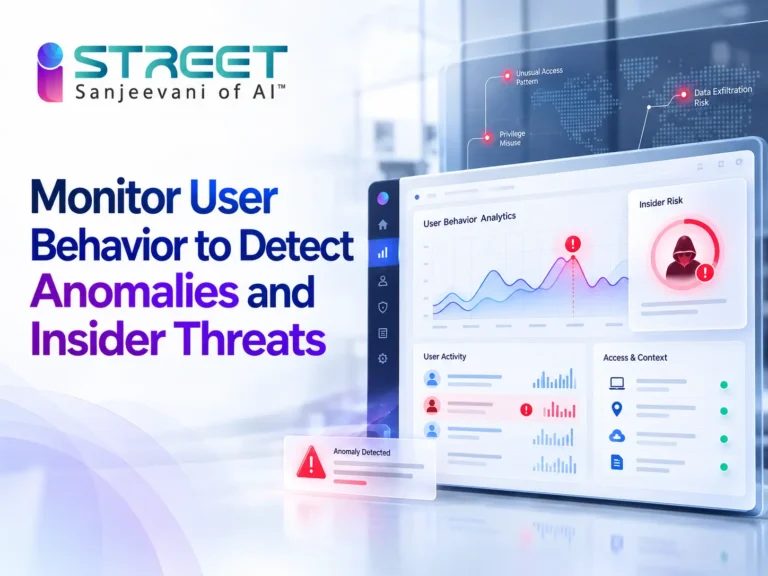
Behavioural detection complements this approach by establishing baselines of normal activity. By continuously modelling the normal behaviour of users, devices, applications, and network flows, behavioural detection identifies deviations that indicate potential threats, even if those threats have never been seen before. Machine learning can analyse these behavioural patterns to identify anomalies that may not be surfaced by signature-based rules alone.
From Perimeter Defence to Zero Trust Architecture
Traditional perimeter-based security placed significant emphasis on distinguishing trusted internal networks from external environments. This model collapsed with the advent of cloud computing, remote work, and supply chain attacks.
Anticipatory security operates on zero trust principles: every request, every user, every device is continuously verified regardless of network location. Zero trust shifts the focus towards continuously evaluating access based on identity, device, context, policy, and the resource being accessed rather than relying primarily on network location.
From Manual Threat Hunting to AI-Assisted Threat Intelligence
Traditional threat hunting relies heavily on skilled analysts, making it increasingly resource-intensive as telemetry volumes and enterprise environments expand. AI-assisted threat hunting can continuously analyse security telemetry, correlate weak signals across large volumes of events, and surface potential threats for further investigation.
AI-driven threat hunting in the Indian context must account for India-specific threat actor profiles, attack patterns targeting India’s UPI infrastructure, phishing campaigns using Indian language lures, and regulatory-specific attack vectors targeting BFSI and healthcare sectors.
From Incident Response to Automated Containment
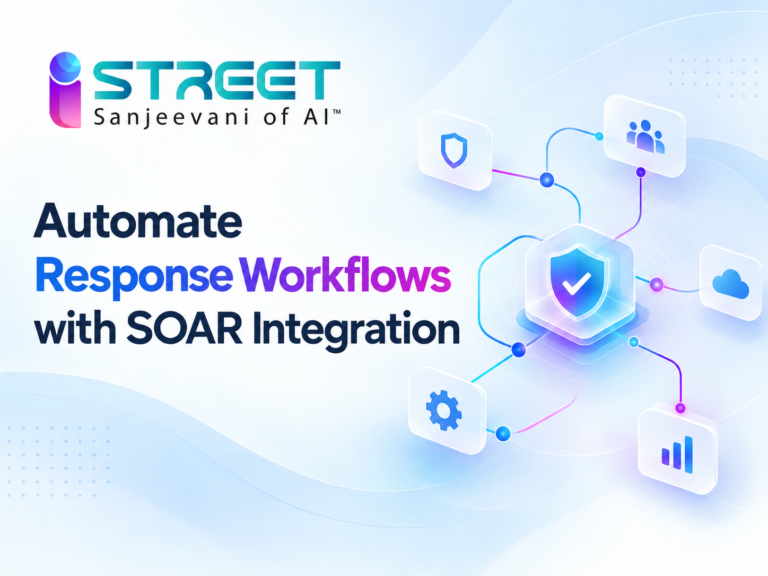
When a threat is detected in an anticipatory SOC, the response does not have to remain a ticket in a queue; predefined workflows can automate appropriate containment actions when a validated threat is detected. Isolating affected endpoints, blocking malicious network flows, revoking compromised credentials, and triggering incident workflows autonomously, can be orchestrated through pre-approved playbooks, with human oversight applied according to organisational policy and risk.
India-Specific Proactive Security Challenges
Building proactive security operations in India requires enterprises to address several important operational and regulatory considerations:
- Regulatory complexity: Enterprises across regulated sectors may need to align security operations with CERT-In requirements, sector-specific regulations from regulatory bodies, and applicable data-protection obligations.
- Talent scarcity: India faces a shortage of experienced cybersecurity professionals, making AI-augmented operations a necessity.
- Digital infrastructure diversity: Indian enterprises span highly sophisticated cloud-native platforms and legacy on-premise systems, often within the same organisation.
- Threat actor sophistication: India faces a disproportionate share of state-sponsored attacks, particularly targeting critical infrastructure, financial systems, and government platforms.
iStreet’s Network: Enabling Proactive Security Operations in India
iStreet Network’s AI-Native SecOps solution supports proactive security operations by combining AI-native threat detection, contextual investigation, response orchestration, and sovereign deployment capabilities..
- Continuous behavioural monitoring: AI-driven behavioural analysis across enterprise security telemetry, detecting subtle anomalies that indicate early-stage attack activity.
- Agentic threat hunting: AI-assisted threat hunting across security telemetry.
- Automated response orchestration: AI-powered orchestration of security workflows, with AI-assisted playbook creation and guided remediation to accelerate incident response.
- Regulatory compliance automation: Native integration with CERT-In reporting workflows, incident notification requirements, and DPDP data breach obligations.
- Sovereign deployment: Supports deployment across enterprise-controlled and sovereign environments, helping organizations maintain control over sensitive security telemetry and meet data residency and governance requirements.
The future of security operations in India is increasingly being shaped by enterprises investing in proactive capabilities before threats escalate into major incidents. As the threat landscape evolves, regulatory expectations increase, and enterprise attack surfaces expand, proactive security operations will become increasingly important to long-term cyber resilience.
The question every Indian CISO must answer is not whether to build proactive security capability, but how quickly. iStreet supports this transition by helping enterprises strengthen detection, investigation, and response through AI-driven security operations.
Begin Your Proactive Security Journey
iStreet offers a Security Operations Maturity Assessment to evaluate your current security posture, identify gaps across detection, investigation, and response, and provide a clear, phased roadmap towards more proactive security operations.
- Contact us to to learn more or request a security architecture briefing with iStreet’s security operations team.
- Request a live demonstration of iStreet’s AI-driven threat detection and response platform.
Supporting the evolution of secure, resilient digital enterprises in India.