Digital transformation is reshaping how essential healthcare services are managed, from registration and consultations to testing, prescriptions and pharmacy operations. Integrating these interconnected functions helps streamline users journeys, improve operational efficiency and enable timely access to critical services. However, as these processes become increasingly dependent on digital applications and shared infrastructure, maintaining system reliability and service continuity becomes essential.
A technical disruption affecting a centralised application, network or shared infrastructure can impact multiple services simultaneously, leading to delays in patient registration, laboratory results, consultations or medication dispensing. Continuous real-time monitoring, intelligent analysis and early identification of technical issues help IT teams detect potential disruptions, accelerate incident resolution and maintain the availability of critical patient services.
Why Digital Service Reliability Matters
When a patient visits a routine consultation, the process begins with registration, followed by a consultation, and diagnostic if required. Each stage may depend on connected applications, databases and supporting infrastructure. When these systems function reliably, information moves smoothly between departments, helping healthcare professionals deliver timely services.
However, an issue affecting a shared server, application or database can slow down multiple stages of the patient journey. Delayed ticket generation can increase waiting times. Difficulties of accessing prescriptions may affect pharmacy operations, while interruptions in laboratory applications can delay the availability of diagnostic results. These challenges demonstrate that digital healthcare reliability is not only an IT requirement but also an essential part of maintaining continuity in patient care.
The Challenge of Managing Interconnected Healthcare Systems
While the interconnected architecture enables efficient information sharing, it also introduces operational dependencies. A performance issue affecting one component can influence several connected services. Technical teams must therefore understand not only whether an application is running but also how effectively it supports essential healthcare workflows.
Several challenges can affect digital service reliability.
- Limited Real-Time Visibility: Without continuous visibility into application and infrastructure performance, technical teams may struggle to recognise service degradation before it affects hospital operations.
- Shared Infrastructure Dependencies: Centralised platforms supporting multiple departments can create widespread disruption when critical components experience problems.
- Delayed Root Cause Identification: Multiple alerts from connected systems can make it difficult to determine which technical issue is responsible for a service interruption.
- Recurring Technical Problems: Restoring an affected service may resolve an immediate disruption without addressing the underlying issue, increasing the possibility of repeated incidents.
These challenges highlight the importance of connecting application performance monitoring with broader infrastructure visibility.
AIOps Can Strengthen Healthcare Service Reliability
Artificial Intelligence for IT Operations (AIOps) helps technical teams analyse operational data, identify unusual system behaviour and investigate service disruptions more efficiently. Combined with end-to-end observability, AIOps can provide a clearer understanding of how technology performance affects services.
Real-Time Application Performance Monitoring
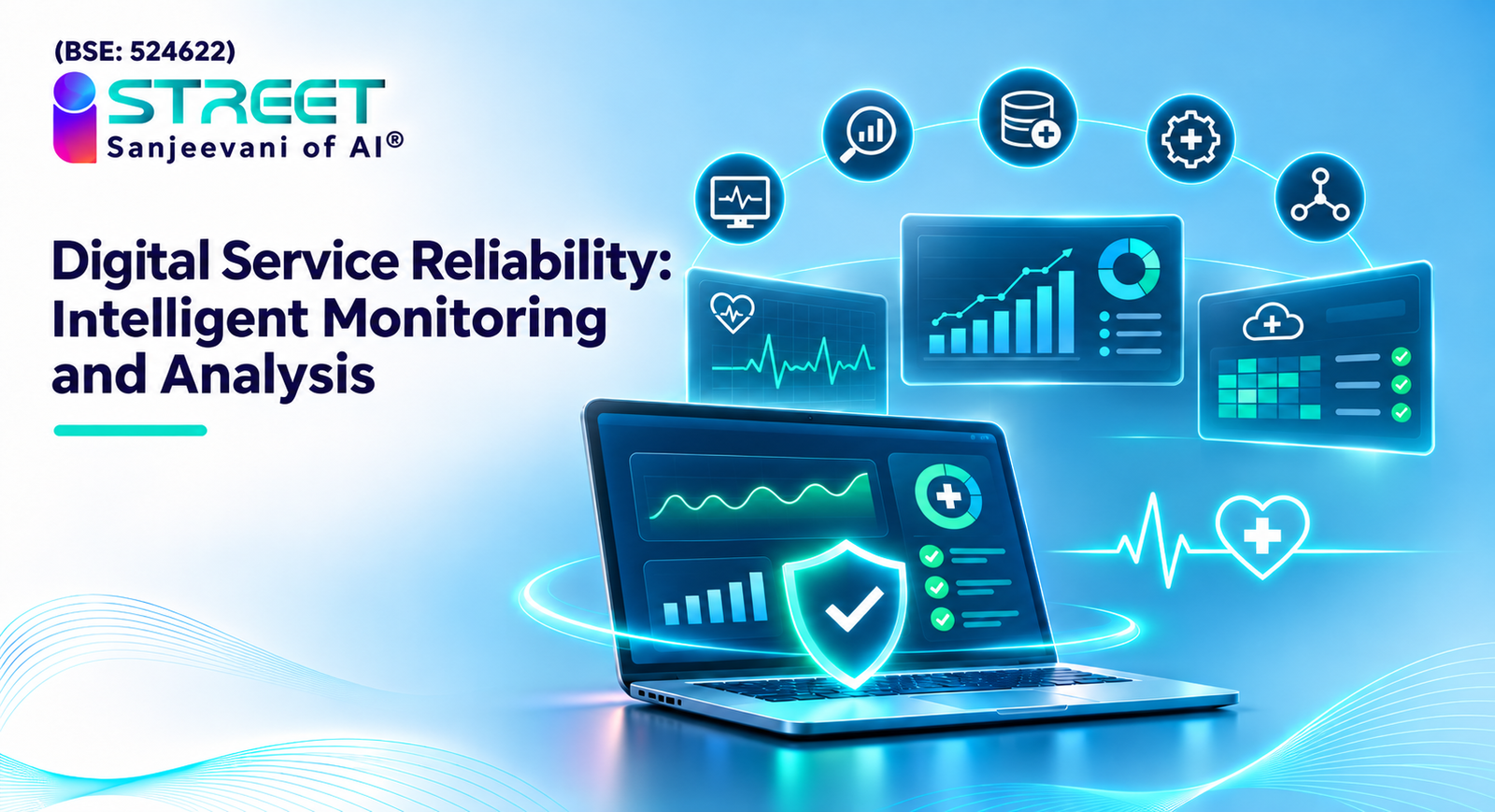
Continuous application monitoring helps track the availability, responsiveness and performance of systems supporting registration, consultations, laboratory services and pharmacy operations. By observing application response times, transaction failures and processing delays, technical teams can identify emerging issues as they occur.
End-to-End Visibility Across Connected Services
Healthcare applications depend on multiple infrastructure components working together. End-to-end observability provides visibility into dependencies between applications, databases, servers and network services. When OP registration becomes unusually slow, technical teams can investigate whether the delay originates from the application, its database or an underlying infrastructure component.
Predictive Anomaly Detection
System performance problems may develop gradually before causing noticeable service interruptions. Increasing response times, unusual resource utilisation and repeated processing failures can indicate potential degradation. AI-driven anomaly detection analyses performance patterns to identify deviations from expected system behaviour.
Intelligent Event Correlation and Root Cause Analysis
When a healthcare platform experiences technical difficulties, different monitoring systems may generate numerous alerts. Investigating each alert individually can delay incident resolution. Intelligent event correlation brings related alerts together, helping technical teams identify the likely underlying issue and understand its impact on connected applications. Automated root cause analysis can further accelerate investigation by highlighting relationships between infrastructure problems and affected healthcare workflows.
Supporting Faster Recovery and Operational Resilience
Real-time monitoring and AIOps also play an important role during service restoration. By identifying affected applications and understanding their dependencies, technical teams can prioritise recovery activities based on operational impact. Continuous performance visibility helps verify whether restored services are responding normally and whether related workflows have recovered. These capabilities complement broader resilience measures, including infrastructure redundancy, failover arrangements, and disaster recovery planning. Although monitoring cannot eliminate every technical failure, it can improve the ability to detect, investigate, and respond to disruptions.
Building Reliable Digital Healthcare Services
Reliable digital infrastructure supports more than application availability. It contributes to better patient experiences, efficient hospital operations and timely access to essential healthcare services. Real-time monitoring helps identify disruptions earlier, while intelligent event correlation and root cause analysis enable technical teams to respond more efficiently. As institutions continue expanding digital services, maintaining visibility across interconnected systems will become increasingly important. The true value of digital healthcare transformation lies not only in connecting hospital services but also in ensuring they remain dependable, responsive and available when patients need them most.
About iStreet Network
iStreet Network Limited is an enterprise-grade, AI-native Sovereign AI ecosystem. At its core is Sanjeevani of AI®, iStreet’s AI Centre of Excellence and integrated framework that brings together observability, security, governance, risk, and compliance to operationalize enterprise AI with greater control, resilience, and assurance