A strategic guide for CTOs, CIOs, IT Directors, and Technology Leaders navigating the convergence of AIOps, SecOps, and enterprise resilience.
Your infrastructure monitoring team tells you something is broken. Your security operations team tells you something is suspicious. Your application team tells you performance is degrading. Your compliance team tells you an audit is due. None of them tell you it’s the same problem or how to fix it before your customers notice.
The tools are working. Every single one of them. NOC dashboards are green until they’re red. SIEM is firing alerts. APM is tracking every transaction. The GRC platform is logging controls. Individually, each tool provides visibility into its own domain. Collectively, they may not provide what teams need during a critical incident: a single, unified answer that explains what is wrong, why it happened, what is at risk, and the appropriate path to resolution. That unified context is often missing because these tools were designed to monitor and manage individual domains. The gaps between those domains can slow investigation and resolution, increase costs, and create greater operational and business risk. A Resilience Operations Center acts as a unified intelligence and coordination layer across operational, security and compliance domains.
A Resiliency Operating Centre eliminates that gap.
The Real Problem Isn’t Visibility. It’s Fragmented Context
Enterprises are not short on data. Infrastructure team has real-time metrics on every server, container, and network segment. Security team has threat feeds, SIEM alerts, and vulnerability scans running continuously. Application teams have APM tools tracking every transaction and error rate. Compliance team has controls mapped to frameworks. This fragmented context is one of the main barriers to operational resilience in complex enterprise environments.
The data exists. Intelligence doesn’t.
Operational intelligence means the platform can identify when the latency spike the operations team is investigating, and the anomalous API activity the security team is investigating may be related symptoms of the same underlying issue. It also means correlating affected business services, identifying the potential business impact, and surfacing resolution guidance based on relevant historical incidents and resolution patterns. Today, each team sees its part of the incident. Each team opens its own ticket. Each team investigates within its own toolset. The information is often brought together later through a bridge call because the tools could not correlate what the teams eventually connected manually.
The cost of that fragmentation is not only operational; it can also affect the business. Delayed resolution can result in revenue impact, customer disruption, regulatory exposure, and reduced stakeholder confidence.
The Operating Model Wasn’t Designed for This Reality
Today’s incidents often span organizational and technology domains. A single event can simultaneously degrade performance, trigger a security escalation, spike cloud costs, and create compliance risk. The underlying cause may be shared, while the symptoms can appear across multiple teams, tools, and dashboards. Enterprise technology environments often include multiple specialized platforms, each serving a specific function and generating its own alerts. But individual tools may not be designed to correlate infrastructure health, threat intelligence, compliance posture, and business impact within a unified operational context and provide relevant resolution guidance. Resilient operations require teams to work from shared incident context rather than isolated tool-level alerts.
That’s the structural gap. Not a lack of monitoring. Not a lack of alerting. A lack of correlated operational intelligence that connects what your tools see individually into the context that teams need to act collectively. A Resiliency Operations Center helps close that gap not by replacing your tools, but by adding an AI-driven correlation and resolution intelligence layer that turns fragmented signals into a correlated operational view: what’s wrong, why it happened, what’s at risk, and the appropriate path to resolution.
What a Resiliency Operations Center Is and What It Isn’t
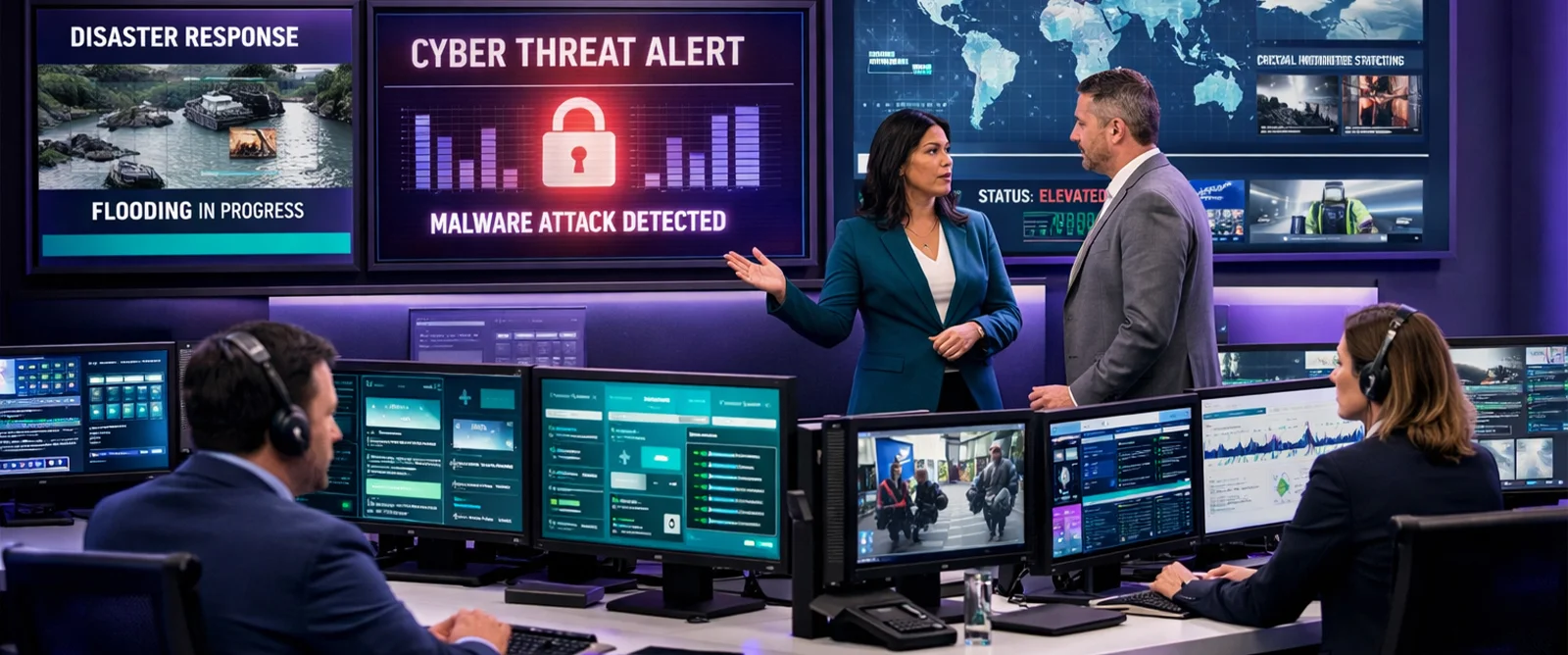
A ROC is not another monitoring tool. It’s not a rebranded NOC or an expanded SOC. It is a unified operating model that brings operational and security intelligence into a unified platform, with shared context across resilience and compliance workflows. It creates a correlated command layer focused on a common objective: accelerating investigation, response, and resolution, not just detection.
It operates as an intelligence and orchestration layer across existing tools. It integrates with observability, AIOps, ITSM, SOAR, and security platforms, ingesting and correlating telemetry across operational and security environments. It adds cross-domain capabilities that individual tools may not provide on their own: AI-driven correlation, resolution intelligence informed by operational and incident context, and business impact context that technology and leadership teams can act on. Unlike a traditional NOC or SOC, a ROC does not focus on one operational domain; it connects signals across operations, security and governance into a shared resilience context. The ROC brings together AIOps, SecOps, observability, ITSM and compliance context without requiring enterprises to replace the underlying tools.
Monitoring tools, Network monitoring tools, Observability tools, ITSM tools, and Security monitoring tools stay. What changes is how their outputs are used: instead of remaining siloed signals consumed by separate teams, they become inputs into a unified intelligence layer that correlates the broader incident context and supports coordinated action.
The Operational Gap a ROC Is Designed to Close
Here’s a question worth asking: across the monitoring, observability, and security tools your enterprise operates, how many provide clear guidance on how to resolve the problem?
Not detect, alert, classify, or even diagnose it. But provide the context and guidance needed to resolve it. This changes incident management from manual cross-team coordination toward shared context, guided investigation and coordinated response.
In many enterprise environments, tools provide strong detection and increasingly sophisticated diagnostic capabilities, while resolution still depends heavily on downstream workflows and human expertise. A ticket is created, the issue is escalated, and an experienced engineer joins the investigation, reviews the available context, and determines the appropriate resolution path. This can make resolution dependent on the availability and institutional knowledge of experienced team members.
A ROC changes this fundamentally. Every incident team resolves the root cause, the fix, the outcome feeds into an AI-driven knowledge base. When a similar pattern reappears, the platform surfaces the recommended fix: root cause, resolution steps, estimated time, affected systems. Team validates and executes instead of starting from scratch. The expertise that once depended on one person’s availability is now organizational intelligence embedded, scalable, and always on.
Core Capabilities of a Resiliency Operations Centre
These aren’t roadmap features. They’re operational from deployment.
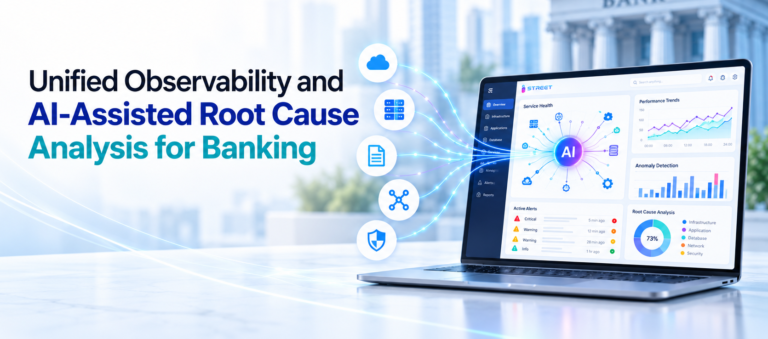
Unified incident visibility. Most serious events in a cloud-native environment span both infrastructure and security. A ROC correlates them into one incident, one timeline, one root cause, one blast radius, one business impact score by AI, enriched with context from every data source, and ready for team to act on the moment they open the console. Every minute currently spent on coordination shifts directly to resolution.
AI-driven root cause analysis. Instead of teams manually pulling logs from one tool, metrics from another, and traces from a third to correlate them under pressure, a ROC uses AI-driven correlation to accelerate root cause analysis across these signals.
Resolution intelligence. Today’s tools detect and diagnose. None of them are resolved. A ROC does by continuously learning from every incident your team closes. Root causes, resolution steps, outcomes, affected components all feed into an AI knowledge base. When a similar pattern appears, the platform delivers the fix. Generative AI can make previous incident context, resolution steps and operational knowledge easier to reuse during active investigation.
Event compression. A ROC reduces alert noise by correlating related signals into actionable incidents enriched with context, business impact, and recommended response actions. This also helps reduce alert fatigue by grouping related signals into contextual incidents.
Capacity forecasting. Most enterprises discover capacity problems when something breaks. A ROC predicts them weeks or months before they hit using AI-driven trend analysis on historical data.
Automated security triage. Security team spends 90% of their time filtering noise. A ROC auto-categorizes, groups, and enriches security events with operational context affected applications, blast radius, correlated anomalies and delivers a prioritized queue of real threats.
Continuous compliance. Audit preparation that took weeks of scrambling becomes a continuous, automated process. Compliance posture is monitored 24/7, violations are detected the moment they occur, and evidence is always current, always audit-ready, always on demand.
Business Outcomes
Every capability above translates into measurable financial outcomes. The value of a ROC is measured by how effectively it improves incident coordination, recovery, governance and enterprise resilience.
20–30% reduction in time spent on incident management and compliance. That time shifts from reactive firefighting to proactive engineering.
2–5% revenue protection from improved uptime and faster resolution. When customer-facing services remain available or recover faster during incidents, enterprises can reduce potential revenue loss and business disruption.
How to Know If Your Enterprise Needs a ROC
- If enterprise has multiple applications each running their own observability and security tools independently, with nobody able to produce a single consolidated view of risk posture or total tooling cost.
- If your incident resolution capability depends on specific individuals rather than systems, if MTTR noticeably increases when certain engineers are unavailable.
- If compliance is a periodic fire drill rather than a continuous state, if team spends weeks gathering evidence from multiple systems before every audit.
- If leadership asking for a unified view of enterprise risk and keeps getting a patchwork of dashboards, spreadsheets, and conflicting severity assessments.
- If cross-domain incidents have become norm events that span infrastructure, security, application performance, and compliance simultaneously, and operating model treats each one as a coordination challenge instead of a unified response.
If three or more of this sound familiar, enterprise has already outgrown the siloed model. These are practical indicators of ROC readiness and of where fragmented operating models are creating resilience gaps.
How to Implement a Resilience Operations Center
The ROC integrates with existing observability, AIOps, ITSM, SOAR, and security tools, enabling enterprises to build a correlated operational view incrementally. Implementation can begin with a focused use case, such as event correlation, automated root cause analysis, or security triage, and expand as capabilities are integrated and value is demonstrated.
The implementation is phased. The ROI is measurable from quarter one. The model scales across group companies, geographies, and business units. A phased ROC implementation can begin with a focused use case such as event correlation, root-cause analysis or security triage before expanding into broader resilience workflows.
The ROC is the next step. The only question is whether you take it now or after the next incident forces the conversation under pressure, and with less time to get it right.
About iStreet Network
iStreet Network’s Sovereign AI Enterprise Platform, built on the Sanjeevani of AI™ framework, enables enterprises to establish a Resiliency Operations Centre by integrating existing observability, AIOps, ITSM, SOAR, and security tools into a correlated operational environment. Enterprises can begin with a focused use case, such as event correlation, automated root cause analysis, or security triage, and expand progressively as capabilities are integrated and operational value is demonstrated.