Walk into a modern Network Operations Center today and it almost feels theatrical. Giant screens line the walls. Heat maps flicker. Charts pulse. Alerts flash in red, amber, and green, all competing for attention. It looks impressive, even reassuring, like the nerve center of a high-tech command ship.
But sit down with the CIO in the corner office for a real conversation and the tone shifts. For all the money poured into observability platforms, analytics tools, and business intelligence software, many IT leaders feel less in control than they did ten years ago. They have more data than ever before, yet fewer clear answers. We are surrounded by dashboards, but actual resolution feels harder to come by.
That disconnect points to a deeper problem. Decision support, at least in its current form, is breaking down. In a world where a single microservice failure can snowball into a multi-million dollar outage in seconds, systems that merely show problems instead of solving them have quietly become liabilities. What once felt empowering is now slowing teams down.
The Quiet Crisis of Dashboard Fatigue
Modern IT environments have crossed a complexity threshold that human-centric monitoring simply cannot keep up with. Infrastructure has sprawled across clouds, containers, APIs, and third-party services. Every layer generates telemetry, logs, metrics, and alerts. All of it demands attention.
Industry surveys suggest that around 75 to 85 percent of organizations expect their IT budgets to increase in 2027. On the surface, that sounds promising. In reality, much of that spend is going toward keeping the lights on rather than building anything new. Maintenance, firefighting, and operational overhead are eating innovation alive.
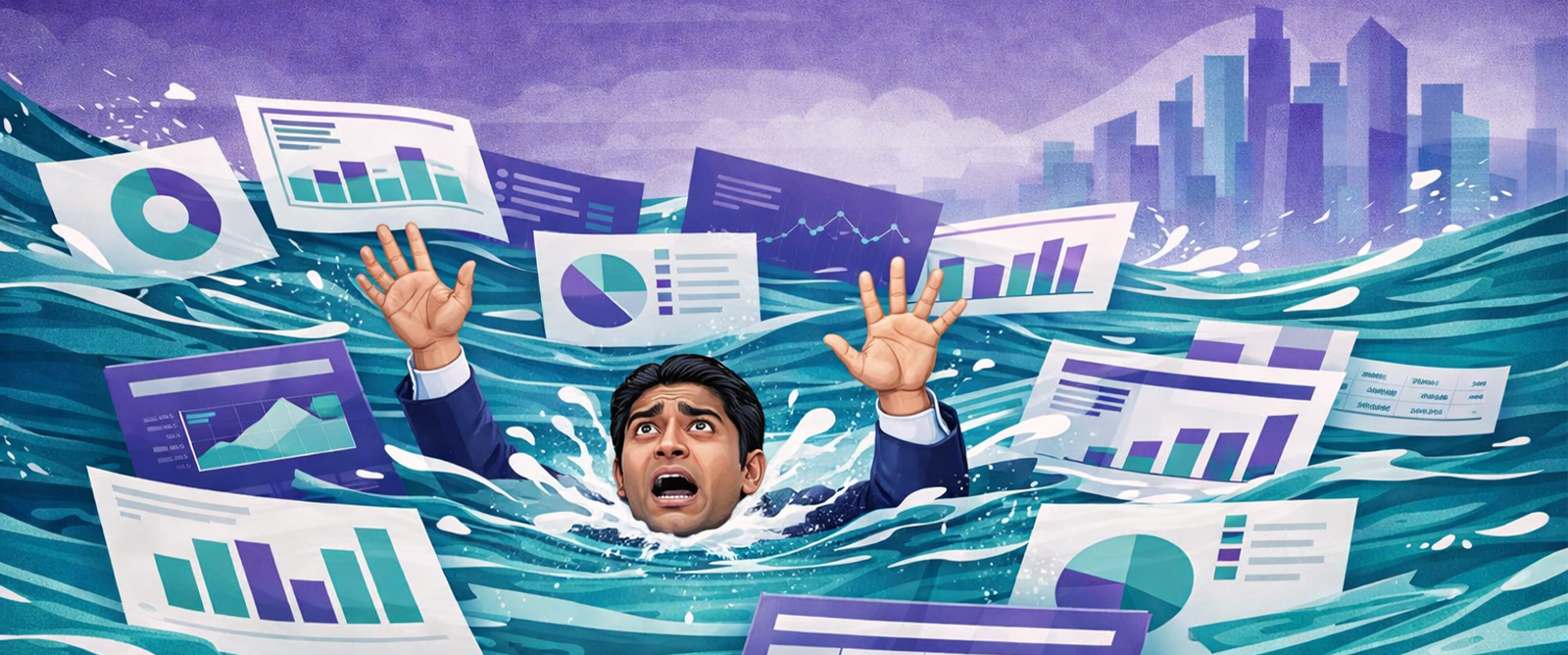
This is where dashboard fatigue sets in. When everything is highlighted as critical, nothing truly is. Teams wallpaper their environments with charts and widgets until the signal disappears into noise. CIOs and operations leaders find themselves stuck in a loop of analysis paralysis. By the time someone interprets an alert, figures out who owns the system, and approves a response, the incident has often already peaked and passed. Customers feel the pain long before humans even agree on what went wrong.
Traditional decision support systems are not malicious or poorly designed. They are just outdated. Most of them tell you what happened, maybe what is happening right now. They are sophisticated rearview mirrors. And no matter how polished a mirror is, it is still the wrong tool for navigating at high speed.
Why Traditional Decision Support Has Reached Its Limit
There are a few fundamental reasons the dashboard-led model is running out of road.
- First, information overload has become the default state. Organizations collect terabytes of telemetry every day, but raw data does not equal understanding. Most tools rely heavily on correlation. CPU spikes appear alongside slow database queries, so the system flags both. What it cannot reliably answer is the causal chain. Did the database slow down because the CPU spiked, or did an upstream dependency trigger both symptoms? Without causation, teams are left guessing.
- Second, there is a widening gap between how dashboards are designed and how work actually gets done. Many dashboards are built by analysts or vendors with executives in mind. They look clean in boardroom demos, but they rarely map to the reality of frontline engineers trying to fix broken systems under pressure. This design mismatch introduces friction at the worst possible moment. Seeing a problem is one thing. Resolving it quickly is another.
- Third, latency has become deadly. In the time it takes for an alert to hit Slack, for someone to notice it, log into a tool, and decide on a response, customer experience has already taken a hit. Modern digital businesses operate at machine speed. Human-in-the-loop decision making often cannot keep pace.
None of this means people are failing. It means the model is.
Moving Beyond Support Toward Autonomous Judgment
The next evolution is not about prettier dashboards or smarter alerts. It is about a fundamental shift from decision support to autonomous judgment. This is the difference between AI that advises and AI that acts.
An autonomous system does not wait patiently for approval while revenue bleeds. It understands the goal, for example maintaining 99.99 percent uptime. It continuously observes its environment, reasons about cause and effect, and executes corrective action in real time. Humans are still involved, but at a higher level, shaping intent and boundaries rather than clicking buttons at three in the morning.
At iStreet, this philosophy takes shape through HEAL Software and Indygen Labs. Instead of focusing purely on detection, HEAL is built around a causation engine. It does not just notice that something is wrong. It works backward to understand why it is wrong.
Picture a network that recognizes a server is about to fail. Instead of firing off an urgent alert and waking someone up, it reroutes traffic, restarts the service, and stabilizes performance in milliseconds. The issue may still be logged and reviewed later, but customers never feel it. This is what self-healing infrastructure looks like in practice, not in marketing slides.
Organizations experimenting with this approach are already seeing dramatic results. False alerts drop by over 96%. Hours of potential downtime are avoided. Teams spend less time reacting and more time improving systems.
Redefining Roles Inside the Enterprise
For most CIOs, the hardest part of this transition is not the technology. It is the mindset shift. Moving toward autonomy requires letting go of the illusion of control and replacing it with choreography. In traditional models, IT teams function as ticket resolvers. Work arrives in queues. Engineers spend their days closing incidents, many of them repetitive. Over time, burnout creeps in and institutional knowledge erodes.
In an autonomous enterprise, those same engineers become logic architects. Instead of fixing the same disk space issue for the tenth time, they design the rules and policies that allow the system to fix itself. They define guardrails, escalation paths, and ethical boundaries. Human judgment moves upstream, where it has far greater leverage.
The payoff is significant. Organizations that move toward autonomous operations report massive reductions in human error and dramatically faster speed to value. More importantly, they reclaim their most expensive asset, human creativity. Engineers get to think, design, and innovate again.
The Sanjeevani Philosophy
At iStreet, this journey is guided by what we call the Sanjeevani of AI™. In mythology, Sanjeevani restored life where it had been lost. In modern enterprises, autonomous intelligence can do something similar. It brings resilience and self-reliance back to IT environments weighed down by years of dashboard sprawl and manual processes.
By 2026, the mark of an exceptional CIO will not be the number of screens glowing in their NOC. It will be how few are needed. The best dashboard is the one you rarely look at because the system is already stable, responsive, and quietly healing itself in the background.
The age of staring at screens and chasing alerts is fading. The era of the autonomous enterprise is taking shape right now. The real question is not whether this shift will happen, but who will lead it and who will be left watching.
Walk into a modern Network Operations Center today and it almost feels theatrical. Giant screens line the walls. Heat maps flicker. Charts pulse. Alerts flash in red, amber, and green, all competing for attention. It looks impressive, even reassuring, like the nerve center of a high-tech command ship.
But sit down with the CIO in the corner office for a real conversation and the tone shifts. For all the money poured into observability platforms, analytics tools, and business intelligence software, many IT leaders feel less in control than they did ten years ago. They have more data than ever before, yet fewer clear answers. We are surrounded by dashboards, but actual resolution feels harder to come by.
That disconnect points to a deeper problem. Decision support, at least in its current form, is breaking down. In a world where a single microservice failure can snowball into a multi-million dollar outage in seconds, systems that merely show problems instead of solving them have quietly become liabilities. What once felt empowering is now slowing teams down.
The Quiet Crisis of Dashboard Fatigue
Modern IT environments have crossed a complexity threshold that human-centric monitoring simply cannot keep up with. Infrastructure has sprawled across clouds, containers, APIs, and third-party services. Every layer generates telemetry, logs, metrics, and alerts. All of it demands attention.
Industry surveys suggest that around 75 to 85 percent of organizations expect their IT budgets to increase in 2027. On the surface, that sounds promising. In reality, much of that spend is going toward keeping the lights on rather than building anything new. Maintenance, firefighting, and operational overhead are eating innovation alive.
This is where dashboard fatigue sets in. When everything is highlighted as critical, nothing truly is. Teams wallpaper their environments with charts and widgets until the signal disappears into noise. CIOs and operations leaders find themselves stuck in a loop of analysis paralysis. By the time someone interprets an alert, figures out who owns the system, and approves a response, the incident has often already peaked and passed. Customers feel the pain long before humans even agree on what went wrong.
Traditional decision support systems are not malicious or poorly designed. They are just outdated. Most of them tell you what happened, maybe what is happening right now. They are sophisticated rearview mirrors. And no matter how polished a mirror is, it is still the wrong tool for navigating at high speed.
Why Traditional Decision Support Has Reached Its Limit
There are a few fundamental reasons the dashboard-led model is running out of road.
- First, information overload has become the default state. Organizations collect terabytes of telemetry every day, but raw data does not equal understanding. Most tools rely heavily on correlation. CPU spikes appear alongside slow database queries, so the system flags both. What it cannot reliably answer is the causal chain. Did the database slow down because the CPU spiked, or did an upstream dependency trigger both symptoms? Without causation, teams are left guessing.
- Second, there is a widening gap between how dashboards are designed and how work actually gets done. Many dashboards are built by analysts or vendors with executives in mind. They look clean in boardroom demos, but they rarely map to the reality of frontline engineers trying to fix broken systems under pressure. This design mismatch introduces friction at the worst possible moment. Seeing a problem is one thing. Resolving it quickly is another.
- Third, latency has become deadly. In the time it takes for an alert to hit Slack, for someone to notice it, log into a tool, and decide on a response, customer experience has already taken a hit. Modern digital businesses operate at machine speed. Human-in-the-loop decision making often cannot keep pace.
None of this means people are failing. It means the model is.
Moving Beyond Support Toward Autonomous Judgment
The next evolution is not about prettier dashboards or smarter alerts. It is about a fundamental shift from decision support to autonomous judgment. This is the difference between AI that advises and AI that acts.
An autonomous system does not wait patiently for approval while revenue bleeds. It understands the goal, for example maintaining 99.99 percent uptime. It continuously observes its environment, reasons about cause and effect, and executes corrective action in real time. Humans are still involved, but at a higher level, shaping intent and boundaries rather than clicking buttons at three in the morning.
At iStreet, this philosophy takes shape through HEAL Software and Indygen Labs. Instead of focusing purely on detection, HEAL is built around a causation engine. It does not just notice that something is wrong. It works backward to understand why it is wrong.
Picture a network that recognizes a server is about to fail. Instead of firing off an urgent alert and waking someone up, it reroutes traffic, restarts the service, and stabilizes performance in milliseconds. The issue may still be logged and reviewed later, but customers never feel it. This is what self-healing infrastructure looks like in practice, not in marketing slides.
Organizations experimenting with this approach are already seeing dramatic results. False alerts drop by over 96%. Hours of potential downtime are avoided. Teams spend less time reacting and more time improving systems.
Redefining Roles Inside the Enterprise
For most CIOs, the hardest part of this transition is not the technology. It is the mindset shift. Moving toward autonomy requires letting go of the illusion of control and replacing it with choreography. In traditional models, IT teams function as ticket resolvers. Work arrives in queues. Engineers spend their days closing incidents, many of them repetitive. Over time, burnout creeps in and institutional knowledge erodes.
In an autonomous enterprise, those same engineers become logic architects. Instead of fixing the same disk space issue for the tenth time, they design the rules and policies that allow the system to fix itself. They define guardrails, escalation paths, and ethical boundaries. Human judgment moves upstream, where it has far greater leverage.
The payoff is significant. Organizations that move toward autonomous operations report massive reductions in human error and dramatically faster speed to value. More importantly, they reclaim their most expensive asset, human creativity. Engineers get to think, design, and innovate again.
The Sanjeevani Philosophy
At iStreet, this journey is guided by what we call the Sanjeevani of AI™. In mythology, Sanjeevani restored life where it had been lost. In modern enterprises, autonomous intelligence can do something similar. It brings resilience and self-reliance back to IT environments weighed down by years of dashboard sprawl and manual processes.
By 2026, the mark of an exceptional CIO will not be the number of screens glowing in their NOC. It will be how few are needed. The best dashboard is the one you rarely look at because the system is already stable, responsive, and quietly healing itself in the background.
The age of staring at screens and chasing alerts is fading. The era of the autonomous enterprise is taking shape right now. The real question is not whether this shift will happen, but who will lead it and who will be left watching.