Identifying a vulnerability establishes the need for corrective action. However, demonstrating that the vulnerability has been addressed within approved timelines, independently verified and appropriately documented, is essential to effective enterprise risk management. To evaluate vulnerability management platforms, the priority extends beyond detection of accuracy and risk prioritisation. Platforms must also support remediation accountability, measurable adherence to Service Level Agreements (SLAs) and reliable evidence throughout the vulnerability lifecycle.
Evaluate Risk-Based Remediation SLA Management
Remediation timelines should reflect the actual risk a vulnerability presents to the organisation. Applying uniform deadlines based exclusively on technical severity may not adequately account for exploitability, asset criticality and business exposure. Enterprises should evaluate whether a vulnerability management platform can accommodate remediation policies based on:
- Vulnerability severity and exploitability.
- Active exploitation and emerging threat intelligence.
- Criticality of affected business services.
- Approved remediation policies.
A vulnerability affecting an internet-facing banking application may require a different remediation timeline from the same vulnerability affecting an isolated internal system. The evaluation should establish whether remediation deadlines remain aligned with institutional priorities as exposure and threat conditions change.
Assess the Accuracy of SLA Tracking
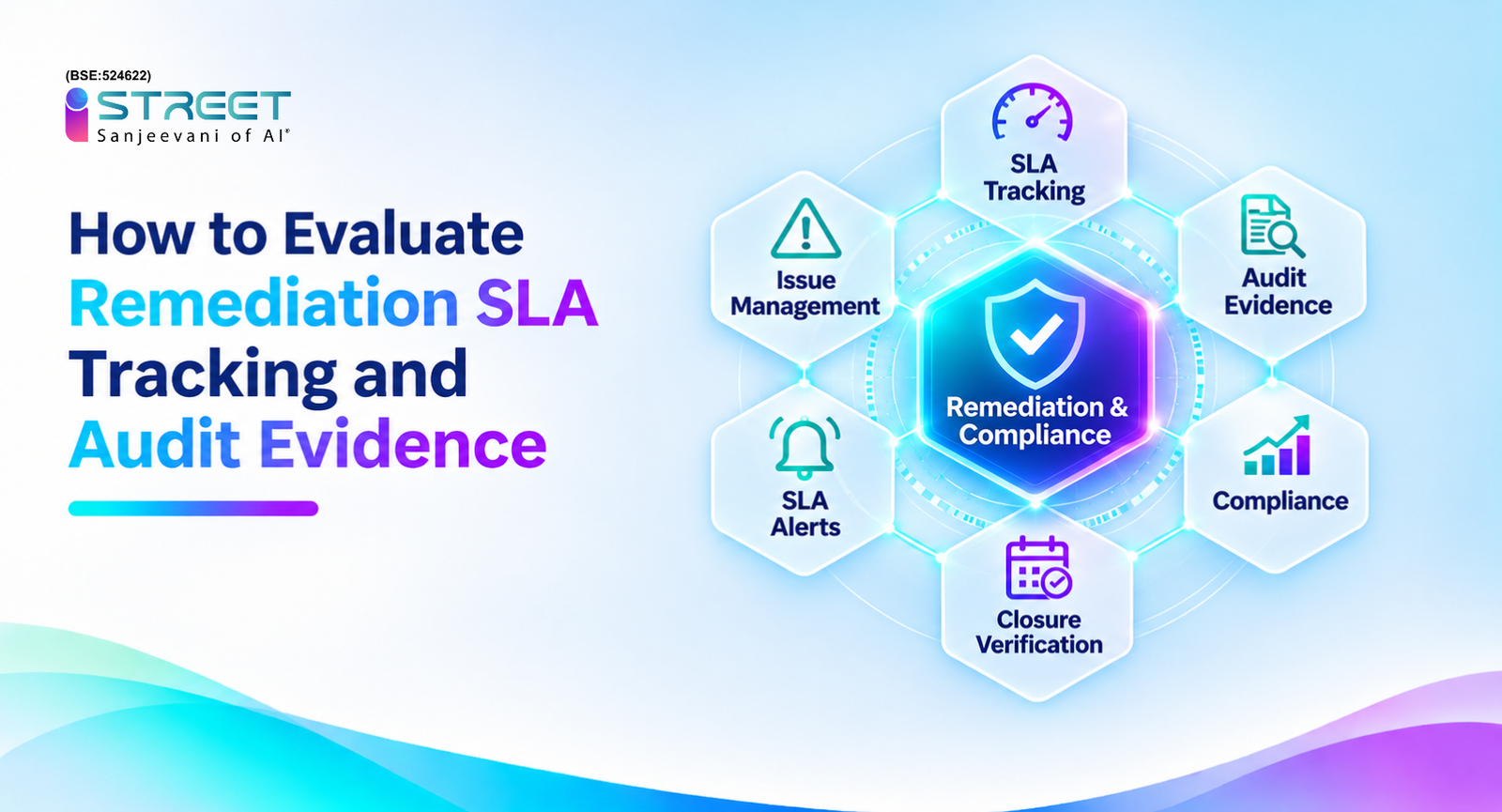
An effective remediation SLA framework must provide a reliable record of the time between vulnerability identification and verified closure. During platform evaluation, financial institutions should examine how remediation timelines are calculated, monitored and reported. Financial institutions should also determine whether repeated scans, ticket reassignment or changes in vulnerability classification affect the accuracy of historical SLA records. A platform should preserve the original remediation history rather than resetting accountability whenever a vulnerability is rediscovered or reassigned.
Validate Remediation Closure
Completing a remediation ticket does not necessarily establish that the associated vulnerability has been eliminated. A software update may have been deployed successfully across most systems while individual assets remain exposed. Similarly, a configuration change may resolve an issue temporarily without preventing its recurrence.
Platform evaluation should therefore examine whether remediation status can be supported by subsequent assessment results, configuration evidence or other appropriate technical validation. Enterprises should distinguish between vulnerabilities awaiting action, corrective measures implemented, remediation independently verified and vulnerabilities operating under approved exceptions.
Examine Risk Acceptance and Exception Governance
Financial institutions operate within environments where immediate remediation may not always be feasible. Application dependencies, vendor support limitations, testing requirements and approved maintenance windows can influence remediation schedules. An effective vulnerability management platform should maintain accountability when remediation extends beyond the original deadline.
The evaluation should determine whether each exception can be supported by a documented business justification, assessment of residual risk, compensating controls, authorised approval and a revised remediation date.
Evaluate the Completeness of Audit Evidence
Audit readiness depends on the ability to reconstruct the complete lifecycle of a vulnerability, from initial identification to verified remediation or authorised risk acceptance. Financial institutions should evaluate whether the platform maintains traceable evidence across all stages. Evidence should remain accessible, protected against unauthorised modification and traceable to the underlying assessment or operational record.
Test SLA Tracking and Audit Evidence During a Proof of Concept
Financial institutions should evaluate platform performance using representative vulnerability scenarios rather than relying exclusively on vendor demonstrations. A structured proof of concept should include vulnerabilities affecting multiple assets, changing risk priorities, delayed remediation, approved exceptions, partial patch deployments and recurring findings.
For each scenario, evaluation teams should examine whether the platform maintains accurate timelines, preserves accountability, validates remediation outcomes and produces sufficient evidence for an independent audit. This establishes whether the platform can operate effectively within existing institutional processes and technology environments.
From Vulnerability Identification to Verified Risk Reduction
iStreet Network Limited’s Sovereign AI ecosystem advances risk-based vulnerability management by connecting identified exposures with corrective action, remediation accountability and verification. For institutions and enterprises managing extensive technology environments, this approach directs remediation resources towards vulnerabilities with the greatest potential business impact. Remediation priorities can be adjusted based on emerging threats, exploitability and asset exposure, helping enterprises address critical vulnerabilities first and allocate resources effectively.
By connecting vulnerability assessments with existing IT service management processes, enterprises can establish clearer remediation ownership, monitor corrective action and identify outstanding exposures requiring intervention. This reduces the coordination effort between security and IT operations teams and supports adherence to institutional remediation timelines. Remediation verification further enables institutions to establish whether corrective actions have effectively addressed identified vulnerabilities, rather than relying solely on ticket closure or reported patch deployment.
For enterprises, the value of remediation, SLA tracking and audit evidence lies in reducing the duration of vulnerability exposure, establishing accountability for outstanding risks and demonstrating that security investments contribute to measurable risk reduction