Artificial intelligence is advancing globally, but the environment in which it operates remains inherently local. Countries and enterprises differ in how they manage data, infrastructure, security, languages, regulatory expectations, and critical digital systems. For India, with its scale, linguistic diversity and rapidly expanding AI ecosystem, adopting AI therefore cannot simply mean importing models and infrastructure developed for another operating context.
Sovereign AI provides a different approach. It creates a framework that lets AI benefit from global innovation while staying aligned with local data, infrastructure, and strategic priorities.
The objective is not technological isolation. It is to establish control over the AI ecosystem so that enterprises can determine how their data is used, where AI operates, how models are governed, and how dependent they can be on external technology environments.
Sovereign AI: A Framework for Enterprise Control
Sovereign AI extends beyond data residency. It is an architectural and operational framework that gives organizations greater control over the infrastructure, data, models, security, governance, and operational environment through which AI is deployed and managed.
As AI becomes embedded across enterprise operations, sovereignty must cover the broader AI ecosystem. This includes where AI runs, how data moves, which models are used, how those models interact with enterprise systems, and how AI decisions and actions are governed.
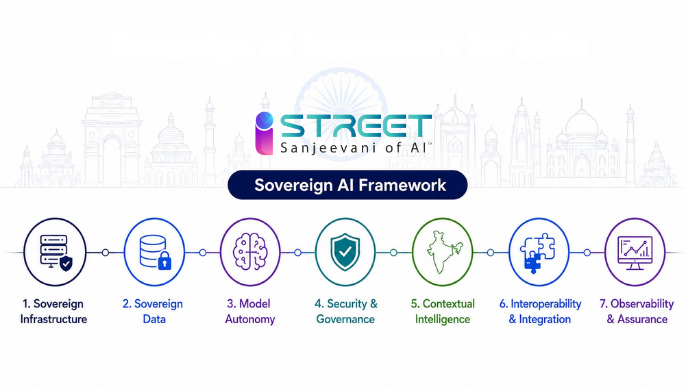
A Sovereign AI framework brings together several interconnected dimensions:
- Infrastructure control — determining where AI compute, models and applications are hosted and operated.
- Data sovereignty — controlling where sensitive data is stored, processed, accessed and transferred.
- Model autonomy — retaining flexibility to use global, open-source, specialized or locally deployed models based on enterprise requirements.
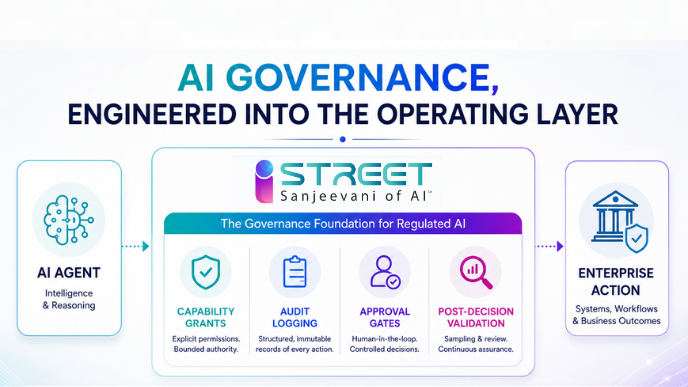
- Security and governance — establishing identity, access, policy, traceability, oversight and accountability across the AI lifecycle.
- Contextual intelligence — adapting AI to enterprise knowledge, industry context, languages and operating realities.
- Interoperability — allowing AI systems to work across applications, platforms, APIs and infrastructure environments without excessive dependency on a single technology ecosystem.
- Operational visibility — continuously monitoring infrastructure, applications, data interactions, models and AI behavior once systems move into production.
Together, these capabilities shift sovereignty from where AI is hosted to how much control an organization retains over how AI is operated, governed, adapted, and evolved.
The Differentiators
Within this framework, three strategic differentiators become particularly important: sovereign data, security and governance, and technology autonomy.
Sovereign Data
Data is the foundation of AI, taking control over its location, movement, access and usage central to sovereignty. A sovereign AI framework should allow organizations to define which datasets can leave controlled environments, which must remain locally processed, and how models interact with sensitive enterprise information.
Security and Governance
As AI gains greater influence over enterprise decisions and operations, governance cannot remain an approval exercise performed before deployment. Models and data changes. AI agents may interact with systems or perform actions. New dependencies can appear as applications evolve. Security and governance must therefore remain active throughout the AI lifecycle.
Technology Autonomy
Sovereignty also requires the ability to make technology choices without becoming disproportionately dependent on a single infrastructure provider, foundation model, or proprietary ecosystem. Autonomy does not mean avoiding global technologies. It means retaining architectural flexibility.
Achieving that flexibility, however, introduces significant operational barriers.
Operational Barriers
Before implementing a sovereign AI framework, enterprises must prepare for operational barriers across technology dependencies, contextual data, interoperability, and visibility.
Hardware and Software Dependency
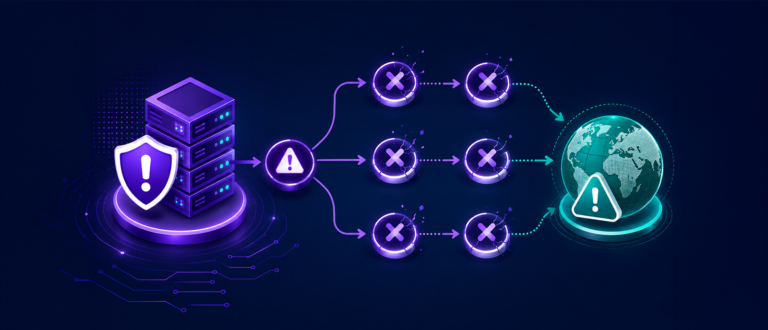
Modern AI requires specialized compute, accelerators, model frameworks, cloud infrastructure, and rapidly evolving software stacks. Dependence on external hardware supply chains, proprietary platforms or a limited number of AI providers can constrain sovereignty even when data itself remains local.
Enterprises therefore need architectures that can accommodate different compute environments and models without rebuilding the entire AI whenever technology choices change.
Local and Contextual Data
A model trained on global information does not automatically understand local context. Indian enterprises operate across regional languages, industry-specific terminology, internal processes, and highly specialized knowledge environments. AI must often understand not only language but also context, meaning and enterprise-specific relationships.
Interoperability
AI rarely operates independently. Models need to connect with applications, databases, APIs, monitoring platforms, security systems and enterprise workflows. When each AI technology uses different integration methods, infrastructure requirements or governance mechanisms, sovereign architecture can quickly become fragmented. Open interfaces, portable architectures and clear integration standards therefore become important components of sovereignty.
Operational Visibility
AI systems also introduce operational behavior that traditional infrastructure monitoring was not designed to capture. An application can remain available while the quality of its AI output deteriorates. A model can respond successfully while using inappropriate data. An AI agent can technically execute correctly while acting outside an expected business context.
Sovereignty therefore requires visibility across infrastructure, applications, models, data interactions, and AI behavior. These barriers determine where sovereign AI frameworks become particularly valuable.
Sovereign AI Framework: Key Applications
The framework becomes especially relevant when AI interacts with sensitive information, critical operations or locally specific knowledge.
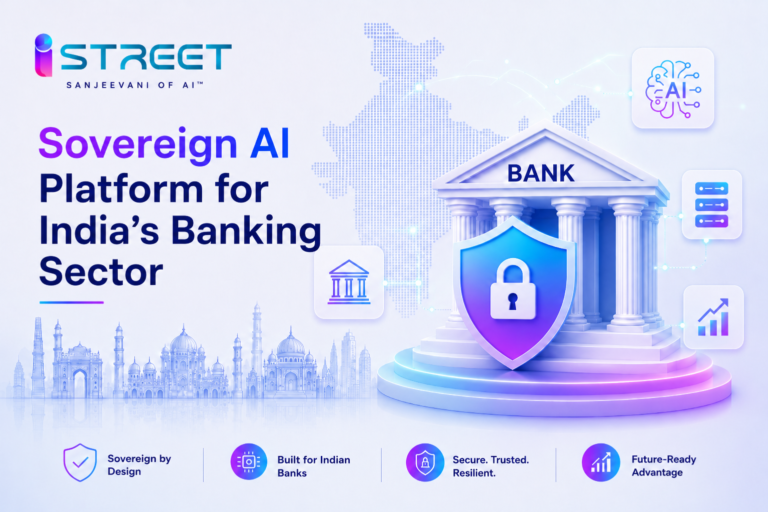
In banking and financial services, sovereign AI can support fraud intelligence, risk analysis, customer service and operational automation while keeping sensitive financial information within defined data and governance boundaries.
Healthcare organizations can use AI for clinical assistance, document intelligence and operational workflows while maintaining greater control over patient information and model access.
Government and public-sector environments can apply AI across citizen services, multilingual interfaces and administrative systems while retaining control over infrastructure, data and decision processes.
The exact architecture will vary between these environments. That is why sovereign AI should be treated as a configurable framework rather than a fixed technology stack.
How to Implement a Sovereign AI Framework
Implementation should begin with sovereignty requirements, not with model selection.
Enterprises first need to classify data and determine which information requires local processing, controlled access, or restricted movement.
The next step is to establish the appropriate infrastructure model. Depending on the use case, this may involve on-premises compute, private infrastructure, sovereign cloud environments or hybrid architectures.
Enterprises can determine where global models are appropriate, where specialized or open models offer greater flexibility and where locally hosted models are necessary.
Security and governance must then be embedded across the architecture, covering identities, model access, policies, approval boundaries, traceability and continuous oversight.
Observability should connect the environment so that enterprises can understand how infrastructure, applications, data and models behave once AI moves into production.
The result is not a completely isolated AI environment. It is a controlled ecosystem where enterprises can adopt innovation while determining the boundaries within which that innovation operates.
Sovereign AI will increasingly be defined not simply by where technology originates, but by how much control an enterprise or nation retains over how that technology operates.
For India, the opportunity is to develop AI ecosystems that combine global technological progress with local infrastructure, contextual intelligence, data control, security and governance. A sovereign AI framework makes that possible by shifting the conversation from where AI is hosted to how AI is controlled, adapted, and operated to meet local needs.
Read more on: The Sovereign AI Platform for Indian Enterprises
iStreet Network Limited is an enterprise-grade, AI-native Sovereign AI ecosystem. At its core is Sanjeevani of AI™, iStreet’s AI Centre of Excellence and integrated framework that brings together observability, security, governance, risk, and compliance to operationalize enterprise AI with greater control, resilience, and assurance.