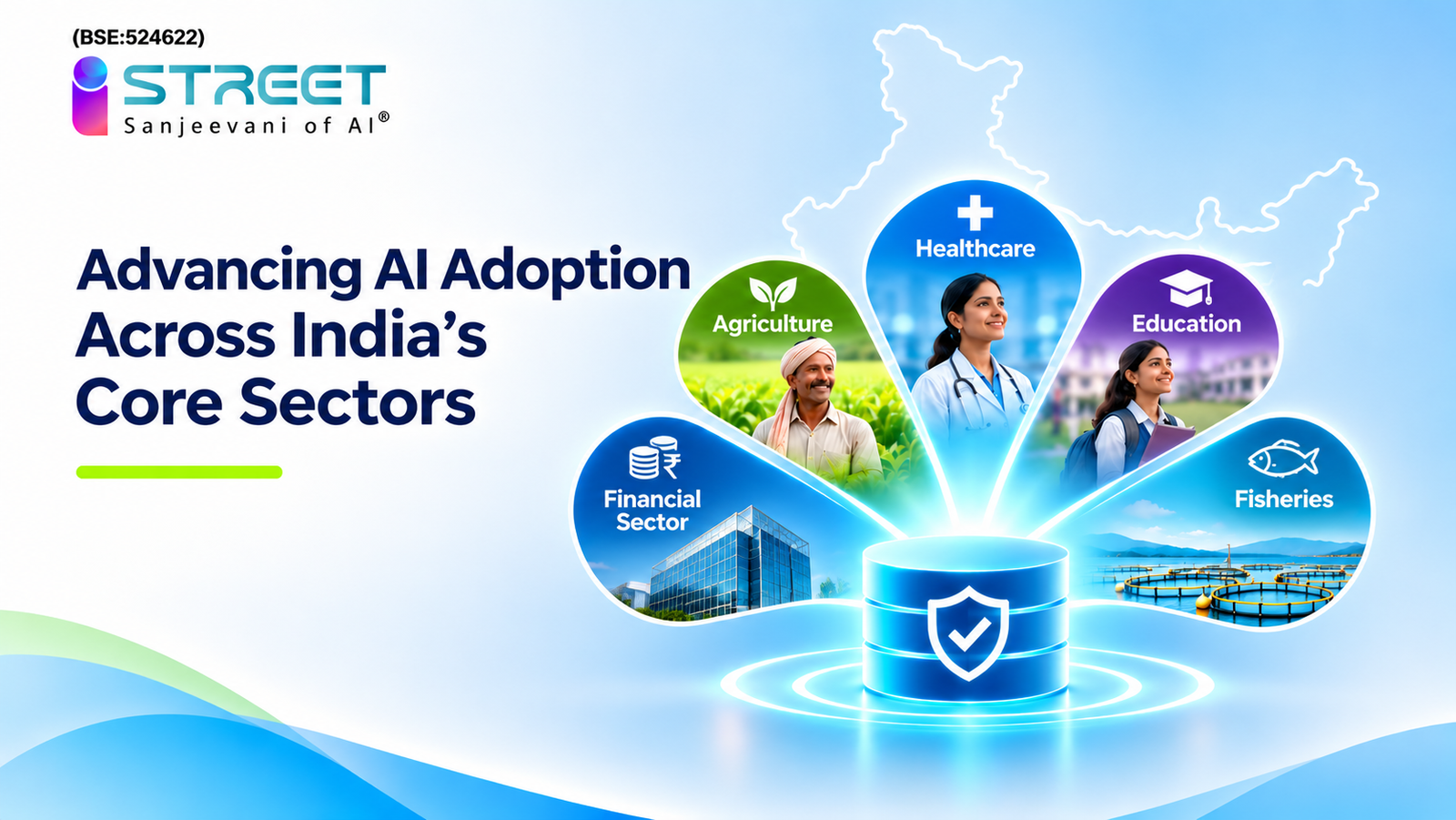
India’s AI transformation presents significant opportunities to strengthen agriculture, fisheries, healthcare, education and disaster preparedness. As digital infrastructure expands and intelligent technologies become more accessible, the next priority is ensuring that AI delivers practical value across communities, industries and essential services. For a farmer seeking market prices, a fishing community assessing weather conditions or a citizen accessing government services, technology must be simple, accessible and supported by reliable information. The next phase of India’s AI development lies in connecting accessible, voice-enabled intelligence with trusted data, and strengthening essential services across the country.
Expanding Access to AI Through Voice-Based Interactions
Voice-enabled AI applications can simplify interactions by allowing users to converse through mobile applications without navigating complex applications or technical interfaces. A farmer could enquire about current commodity prices, expected rainfall, crop management practices or eligibility for government schemes through a simple voice command.
Speech recognition, natural language processing and information retrieval technologies can work together to interpret these requests, retrieve relevant information and deliver accessible responses. However, the effectiveness of such applications depends on the accuracy of the information they retrieve and their ability to understand regional contexts.
Strengthening Decision-Making Through Contextual AI Intelligence
Indian agriculture encompasses diverse crops, climatic conditions, soil characteristics and market structures. Farmers require timely information to support cultivation, harvesting, resource management and decisions. AI-enabled advisory systems can connect agricultural knowledge with location-specific environmental and economic information. For agricultural cultivation, rainfall patterns, crop growth stages, soil conditions and expert advisories can support informed decisions on crop management, irrigation planning, pest monitoring and disease-risk assessment. Weather forecasts and commodity market intelligence further enable farmers to optimise production activities and make informed decisions.
Similar approaches can support rice, wheat, cotton, horticulture and other agricultural activities across India. The Ministry of Agriculture’s AGMARKNET provides reported agricultural market prices and arrivals, while the India Meteorological Department issues weather forecasts and agricultural advisories. Integrating these established information sources with AI-enabled interfaces can make relevant agricultural intelligence easier to access and interpret.
India’s extensive coastline and inland fisheries create further opportunities for AI-enabled decision support. Fishing activities depend on ocean conditions, weather forecasts, fishing-zone advisories, market demand and operational safety. AI-enabled applications could combine the data from verified advisories with accessible voice interfaces, enabling users to retrieve location-relevant information about sea conditions, applicable warnings and fishing opportunities. Such applications must preserve the accuracy, validity and safety instructions of authoritative advisories.
The same data-driven approach can extend to other critical sectors.
In healthcare, voice-enabled applications can improve access to verified health information, appointment assistance and public healthcare services while maintaining clinical oversight.
In education, AI-assisted learning can make educational resources more accessible and support personalised learning experiences.
In disaster preparedness, integrating authoritative weather forecasts, geographic information and official emergency advisories can support timely communication and public awareness.
Across these sectors, data privacy, information accuracy, system reliability and institutional accountability remain essential requirements.
The Foundation of Reliable AI
AI systems depend on the quality of the information used to generate recommendations. In agriculture, meaningful intelligence requires the integration of multiple datasets, each contributing a different perspective.
Soil Information: Soil Health Cards and agricultural records provide information on nutrient conditions and crop-specific requirements.
Weather Intelligence: Forecasts, rainfall observations and agricultural advisories support location-specific assessments.
Market Intelligence: Commodity prices, market arrivals and trading information provide insights into agricultural market conditions.
Our AI systems distinguish observed data from forecasts, identify records, and retain appropriate source attribution. Reliable data transforms AI from a general information interface into a more contextual and accountable decision-support capability.
iStreet’s Sovereign AI Vision: Connecting Technology with Real-World Needs
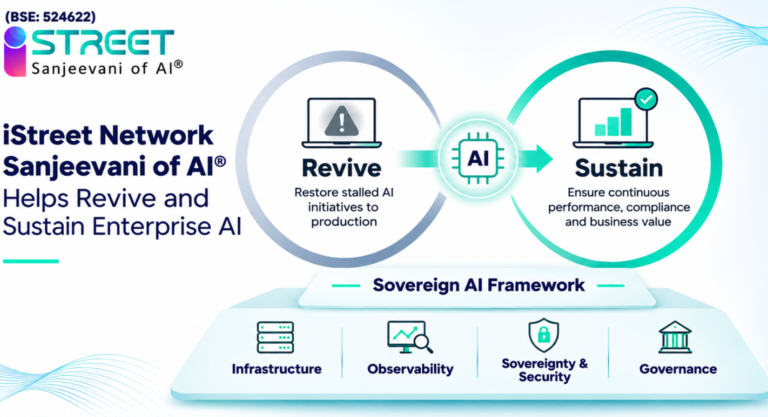
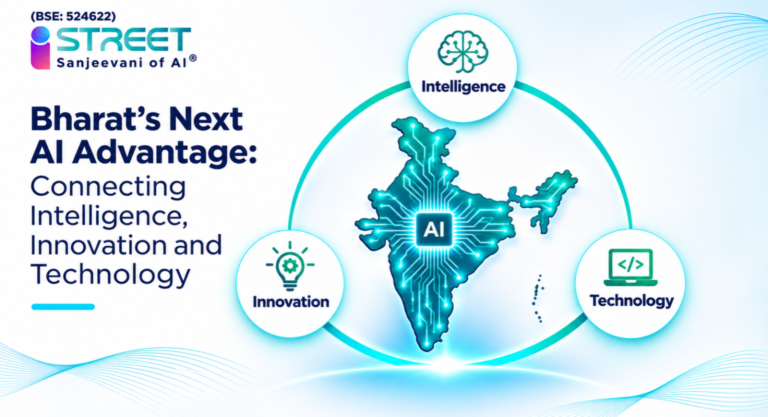
iStreet Network Limited’s Sovereign AI vision, through Sanjeevani of AI® framework and AI Center of Excellence (AICoE), focuses on connecting technology, research and innovation with challenges across India’s critical sectors. The initiative connects Bharat’s collective intelligence with technological expertise and domain knowledge to develop solutions addressing financial systems, agriculture, national security, and healthcare. Within this framework, AI applications and reliable sectoral data represent interconnected priorities. The AICoE provides a structured approach to translating sector-specific requirements into AI use cases, bringing together research, technical expertise, governance and implementation capabilities. Sovereign AI emphasises appropriate control over sensitive information, secure infrastructure, responsible AI deployment and accountability across intelligent systems. This approach supports the development of AI capabilities aligned with India’s institutional priorities, operational requirements and long-term digital resilience.