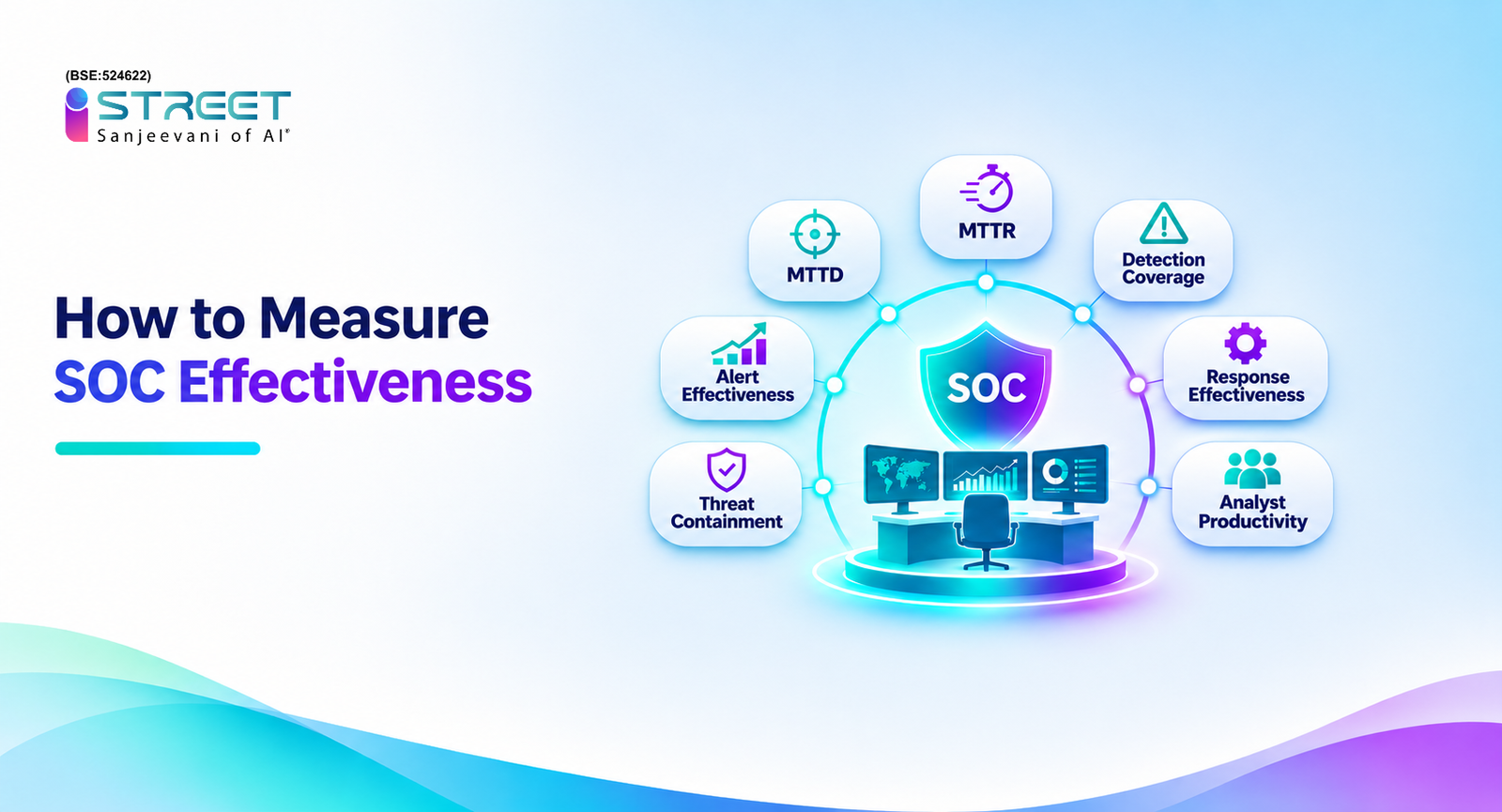
Measuring the effectiveness of security operations requires financial institutions to determine whether existing cybersecurity investments deliver measurable protection against evolving threats. Improvements in detection and response times must be evaluated against the speed of threat progression, potential financial exposure and impact on critical services. The Digital Threat Report highlights that six of the seven emerging threat predictions from its previous edition had materialised at scale. Recent advisories on AI-assisted threats and unauthorised financial transactions further reinforce the need for Indian financial institutions to establish a risk-based framework for measuring SOC effectiveness, validating security readiness and identifying operational improvement priorities.
Measuring SOC Performance Against Accelerating Cyber Threats
AI-assisted attacks are changing the timelines within which security operations must identify, investigate and contain potential threats. Financial institutions may demonstrate consistent improvements in MTTD and MTTR, but the significance of these improvements must be evaluated against the speed at which emerging threats can create financial or operational impact. An investigation completed within an established response target may still require reassessment if the associated threat can affect financial operations within a substantially shorter timeframe.
Security performance benchmarks must therefore evolve alongside the threat landscape. Aligning detection and response targets with the potential financial consequences of an incident enables institutions to assess whether their security capabilities provide sufficient time for effective intervention. This shifts SOC measurement from historical performance comparisons towards risk-informed operational preparedness.
Establish a SOC Performance Baseline
Financial institutions should begin by establishing a measurable baseline across existing security operations using historical incident records, investigation timelines, response activities and operational performance data.
The baseline should include:
- Detection, investigation, containment and recovery timelines.
- Incident volumes across severity categories.
- Investigation backlog and escalation frequency.
- Validated detection coverage across critical services.
- Analyst workload and investigation costs.
- Financial and operational impact of security incidents.
Establishing a consistent baseline enables financial institutions to evaluate subsequent improvements and identify whether changes in security investments, operational processes or resource allocation deliver measurable results.
Establish Risk-Based Detection and Response Targets
Uniform detection and response targets may not adequately reflect the different levels of exposure across financial operations. An incident involving a critical payment service requires different intervention priorities from an incident affecting a non-critical internal application.
Financial institutions should establish performance targets based on:
- Potential financial exposure.
- Criticality of affected business services.
- Sensitivity of the information involved.
- Potential impact on customers.
- Acceptable operational disruption.
- Speed at which the threat could escalate.
MTTD and MTTR should then be assessed against these institution-specific targets rather than relying exclusively on industry averages. Measuring the percentage of critical incidents detected and contained within approved targets provides a more meaningful indication of operational preparedness.
Measure Investigation and Response Performance Across the Incident Lifecycle
Overall detection and response metrics may not identify the specific stages where operational delays occur. Financial institutions should measure elapsed time across individual stages of the incident lifecycle. This approach helps security leaders determine whether performance improvement requires additional technology capabilities, better investigation processes, revised approval procedures or stronger coordination between operational teams.
Validate Detection Coverage Through Threat Simulation
Detection coverage should be measured against demonstrated security effectiveness rather than the number of deployed monitoring tools or configured detection rules. Recent cybersecurity advisories concerning the misuse of trusted payment workflows and AI-assisted threats highlight the importance of continuously validating detection capabilities against emerging risks.
Each assessment should establish:
- Whether the simulated threat was detected.
- Whether detection occurred within the approved timeframe.
- Whether sufficient information was available for investigation.
- Whether the incident was correctly prioritised.
- Whether appropriate response procedures were initiated.
Detection coverage can then be evaluated as the proportion of applicable threat scenarios with successfully validated detection capabilities.
Measure Third-Party Security Response Effectiveness
SOC performance measurement must therefore extend beyond activities directly managed by the financial institution. For incidents involving technology partners, institutions should evaluate vendor notification timelines, availability of investigation evidence, response coordination, adherence to contractual service levels and containment verification. These measurements provide greater visibility into shared security responsibilities and support more informed evaluation of technology partnerships and third-party risk.
Evaluate Security Investment Effectiveness
SOC performance should demonstrate whether cybersecurity expenditure contributes to measurable improvements in security operations. Financial institutions can compare performance before and after significant technology investments or operational changes using indicators such as:
- Cost per completed security investigation.
- Analyst hours required per incident.
- Percentage of investigations completed within target timelines.
- Reduction in unresolved high-priority incidents.
- Improvements in validated detection coverage.
- Reduction in security-related business disruption.
Comparisons should account for changes in incident volume, complexity and severity to ensure that performance improvements are assessed consistently. This enables security leaders to identify where additional investment is justified and where existing capabilities can be utilised more effectively.
iStreet’s Sovereign AI Ecosystem: Advancing Measurable Security Effectiveness
iStreet Network Limited’s Sovereign AI ecosystem enables financial institutions to establish an evidence-based approach to measuring SOC effectiveness by connecting security events, investigation records, response actions and business-service performance across existing technology environments. By establishing a consolidated incident timeline, financial institutions can measure the elapsed time between threat detection, investigation, decision-making, containment and service restoration. This provides greater clarity into where operational delays occur, whether they originate from detection capabilities, investigation complexity, approval processes or response coordination.
Institutions can also evaluate detection coverage against observed threat activity and critical asset exposure, assess analyst effort across investigations and measure the operational impact of security incidents. Comparing these indicators against established performance baselines and institutional targets enables security leaders to determine whether improvements in MTTD, MTTR and investigation efficiency translate into reduced financial exposure and business disruption.
Within the Sanjeevani of AI® framework, iStreet’s Sovereign AI ecosystem connects security performance with operational and business outcomes, enabling financial institutions to identify improvement priorities, evaluate cybersecurity investment effectiveness and demonstrate measurable progress in SOC maturity.


