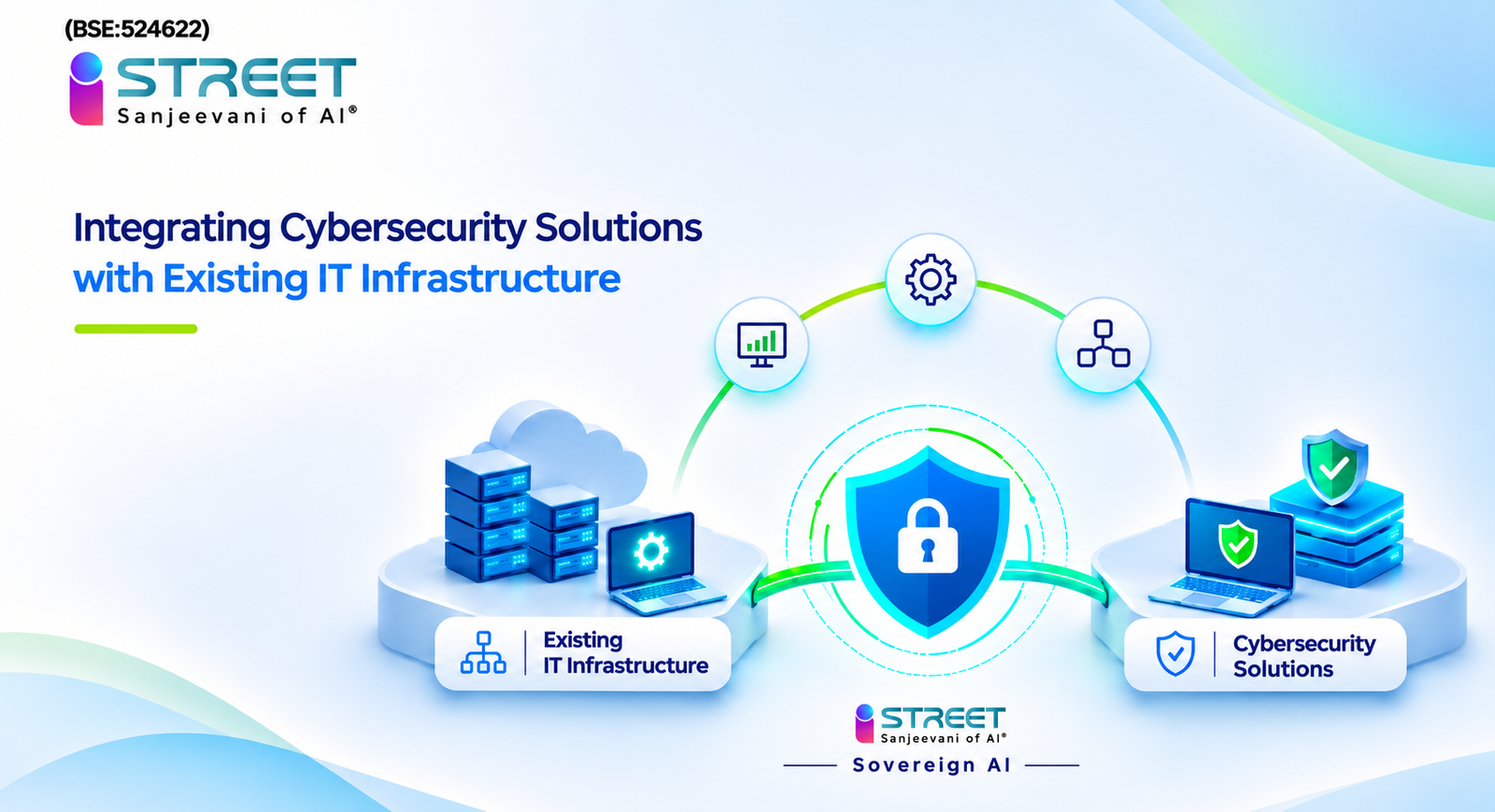
Enterprise cybersecurity integration has traditionally focused on connecting security platforms, consolidating alerts and improving visibility across IT infrastructure. While these capabilities remain essential, they no longer address the full complexity of modern enterprise environments. Applications continuously evolve, infrastructure dependencies change, third-party integrations expand and AI-driven systems introduce new forms of operational risk. A cybersecurity platform integrated successfully today may develop visibility gaps tomorrow as underlying systems change.
The next priority for enterprises is not merely connecting cybersecurity technologies, but ensuring that their security architecture can anticipate emerging risks, identify integration gaps and adapt before vulnerabilities translate into operational disruptions.
Why Existing Cybersecurity Integration Approaches Are No Longer Sufficient
Most organisations already operate interconnected security platforms, including SIEM, endpoint protection, identity management, network security, and vulnerability management solutions. However, technical connectivity does not necessarily establish comprehensive security intelligence. For an enterprise introducing a new customer-facing application connected to legacy infrastructure through multiple APIs, existing security platforms may successfully collect application and network events, yet fail to recognise a newly introduced service account, an undocumented dependency or a change in access privileges. Each security tool may function correctly while the broader environment develops an undetected exposure.
Similarly, integrating additional security platforms can introduce overlapping detection rules, conflicting response workflows and increased dependence on third-party services. The fundamental challenge has shifted from establishing connectivity to maintaining security effectiveness as enterprise technology environments continuously change.
What Enterprises Must Anticipate Beyond Conventional Integration
1. Security Blind Spots Emerging Between Integrated Systems
Connected platforms may exchange information without capturing every security-relevant event. Missing telemetry, inconsistent timestamps and incomplete identity context can prevent analysts from reconstructing an attack sequence. Enterprises should therefore continuously validate telemetry coverage, data completeness and correlation accuracy rather than assuming that successful integration guarantees comprehensive visibility.
2. Undetected Changes in Application and Infrastructure Dependencies
Cloud migrations, application updates and third-party integrations can alter communication paths and access relationships without corresponding updates to security controls. Maintaining an evolving understanding of application dependencies and privileged access relationships helps organisations identify exposures introduced through infrastructure changes.
3. Conflicting Automated Security Responses
As organisations introduce AI-assisted incident response, independent security platforms may initiate actions affecting the same infrastructure components. An automated isolation decision could interrupt a business-critical service if operational dependencies are not adequately understood. Enterprises require coordinated response policies, defined approval boundaries and mechanisms to reverse actions when necessary.
4. New Risks Introduced by AI-Enabled Systems
AI agents interacting with enterprise applications can introduce additional identities, permissions, and decision-making pathways. Security integration must therefore extend beyond traditional infrastructure monitoring to consider AI system access, information flows, delegated authority and accountability for automated actions.
How Enterprises Can Build a Cybersecurity Integration Architecture
Addressing these challenges requires a shift towards continuous integration assurance.
- Identify potential failure scenarios. Organisations should identify how compromised identities, missing security signals, failed dependencies or inappropriate automated actions could affect critical business services.
- Establish continuous integration validation. Monitor whether connected systems continue producing reliable telemetry and whether security information remains usable following configuration changes, software upgrades or infrastructure modifications.
- Connect threat intelligence with changing enterprise dependencies. Security findings become more actionable when correlated with asset criticality, application relationships, identity privileges and business service exposure.
- Embed governance directly into integration decisions. Data access, information residency, AI permissions and automated response authority should be governed throughout the integration lifecycle rather than evaluated only during deployment.
This approach transforms cybersecurity integration from a one-time implementation activity into a continuously validated enterprise security capability.
The Enterprise Value of Security Integration
Enterprises gain confidence in their security coverage, earlier identification of emerging integration gaps, and improved understanding of threats affecting critical business services. Continuous validation can reduce the risk of undetected security degradation, while contextual risk assessment supports more effective allocation of security resources. Governed response mechanisms also help balance incident containment with operational continuity, particularly across financial services, healthcare and other critical environments.
How iStreet Advances This Approach Through Sovereign AI
iStreet Network Limited advances an integrated approach to enterprise security through its Sovereign AI vision, connecting intelligent security operations with enterprise governance, operational control and institutional resilience. Through Sanjeevani of AI® and its AI Center of Excellence (AICoE), iStreet bring together Bharat’s collective intelligence, technology, research and innovation to address real-world challenges. Within enterprise cybersecurity, our AI native SOC capabilities provide a foundation for connecting security intelligence, threat investigation and contextual risk prioritisation.
The Sovereign AI approach introduces an equally important consideration: enterprises must retain appropriate control over sensitive information, AI-enabled decisions and the authority granted to intelligent systems. This becomes increasingly significant as cybersecurity evolves towards AI-assisted investigation and automated response across interconnected technology environments. iStreet’s direction is to advance cybersecurity beyond fragmented monitoring towards connected, governed and intelligence-driven security operations, supporting enterprises in strengthening protection while preserving accountability and operational resilience. By combining continuous integration of assurance, contextual security intelligence and responsible AI governance, enterprises can move beyond conventional interoperability towards more adaptive and resilient security operations.


